Problem page
Foundation Settlement in Houston
Settlement is what people mean when they say a house is sinking. In Greater Houston it is usually less about the house and more about what the soil beneath it is doing from season to season.
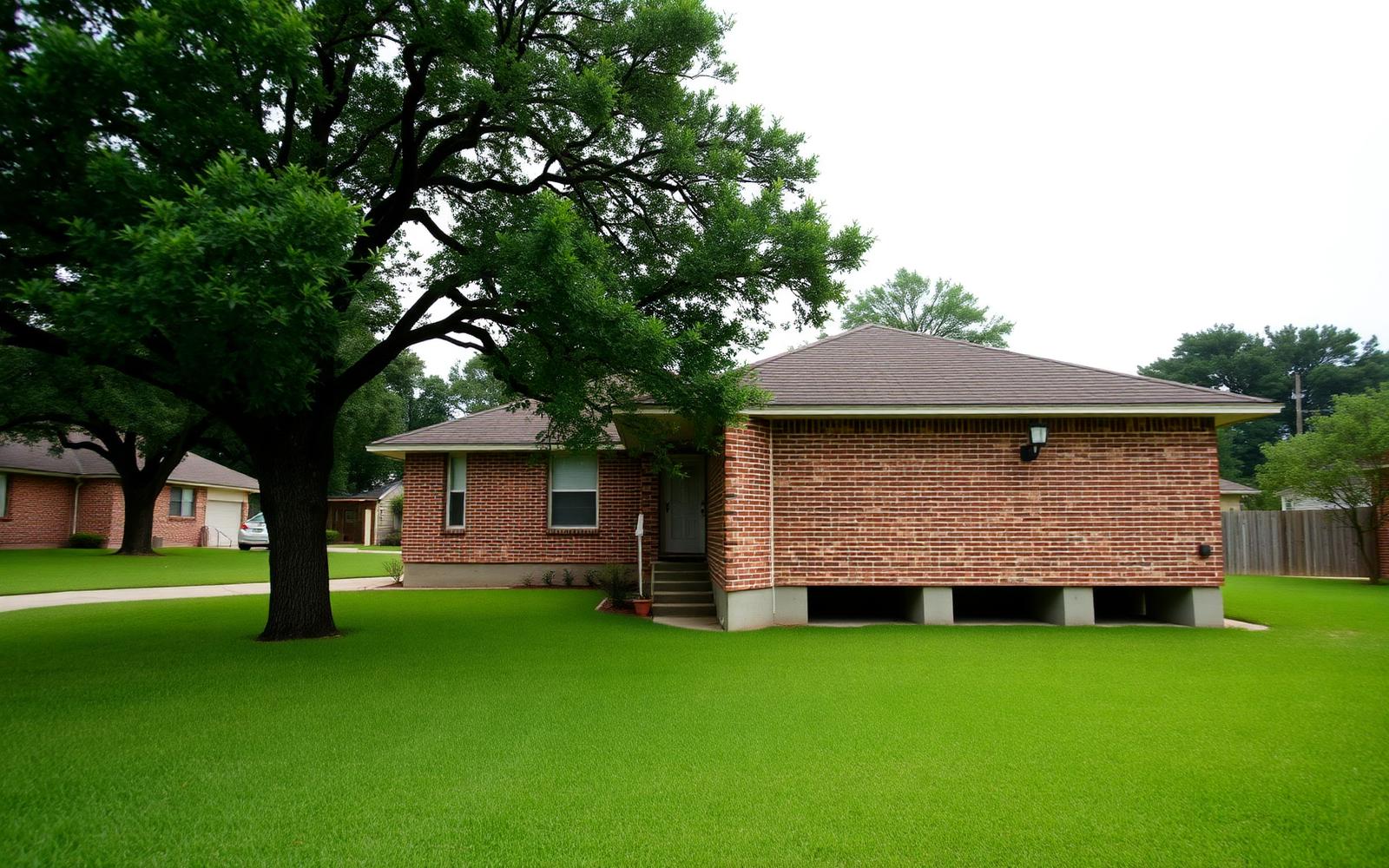
Uniform settlement vs. differential settlement
If an entire foundation drops evenly, very little shows. Doors still close, brick stays intact, floors stay in plane. Differential settlement — one part of the structure dropping relative to another — is the condition that produces damage, because the building has to deform to accommodate the difference.
This is why the measurement that matters is the change in elevation across a distance, not the absolute depth of the drop.
Clay soil and the seasonal cycle
Much of the Houston metro sits on clay-rich soils that change volume with moisture content. During prolonged hot and dry periods, those soils lose water and shrink — most at the exposed perimeter, least beneath the protected center of a slab. The foundation edge loses support and moves down.
Heavy rainfall reverses part of that. Soil rehydrates and swells, and some of the movement recovers. A house can ride this cycle for years with only cosmetic effects, or it can accumulate permanent displacement, depending on how extreme and how uneven the cycle is at that particular property.
Why one corner and not another
Settlement is rarely symmetrical, and the reasons are usually site-specific:
- A large tree drawing moisture from soil on one side during a dry spell
- A downspout or low area keeping one corner saturated year-round
- Grading that has reversed and now directs water toward the slab
- A shaded elevation that dries far more slowly than a sun-exposed one
- Fill soil beneath part of the pad that was less compacted than the rest
- A leaking supply or drain line beneath the slab introducing localized moisture
Because these are conditions rather than events, correcting them matters alongside repair. See foundation drainage solutions.
What settlement looks like
Diagonal cracks above doors and windows, stair-step separation in exterior brick, floors that slope toward an exterior wall, gaps between baseboards and flooring, and doors that no longer latch on one side of the house. Each of these is covered on the signs of foundation problems hub, and cracking specifically on foundation cracks.
How settlement is addressed
Confirming it starts with an elevation survey during a foundation inspection. Where structural correction is warranted, foundation piers restore support beneath the settled area. On a slab-on-grade home that work is described on the slab foundation repair page; recovering elevation is covered under house leveling. Broader context sits on the foundation repair page, and budget ranges on the cost page.
Settlement contributors in this region
Prolonged dry periods
Extended heat pulls moisture from perimeter soil, which shrinks and drops away from the slab edge.
Heavy rainfall events
Rapid rehydration swells soil unevenly, especially where drainage concentrates water.
Site drainage
Grading and runoff determine which parts of the perimeter stay wet and which dry out.
Sub-slab plumbing leaks
Where present, they create a persistent moisture source unrelated to the weather.
Foundation settlement questions
Is some settlement normal?
Yes. Nearly every house settles somewhat in its first years as the soil consolidates under the new load. The concern is differential settlement — one part of the structure moving significantly more than another, years after construction.
Does settlement stop on its own?
Sometimes movement stabilizes, particularly if the cause was a one-time event such as a corrected leak. Movement driven by seasonal soil moisture cycles tends to recur, though not always progressively.
How much settlement is too much?
There is no universal threshold that applies to every house. The evaluation weighs the amount of elevation difference, the distance over which it occurs, the age and type of construction, and how the structure is responding.
Free Settlement Evaluation
Tell us which part of the house appears to have dropped.
Think part of your house is sinking?
Elevation readings will tell you how much has moved and whether it is still moving.