Problem page
Foundation Cracks in Houston Homes
Cracks are the symptom homeowners notice first — and the one most often misread in both directions. Some mean nothing structurally. Some are worth acting on.
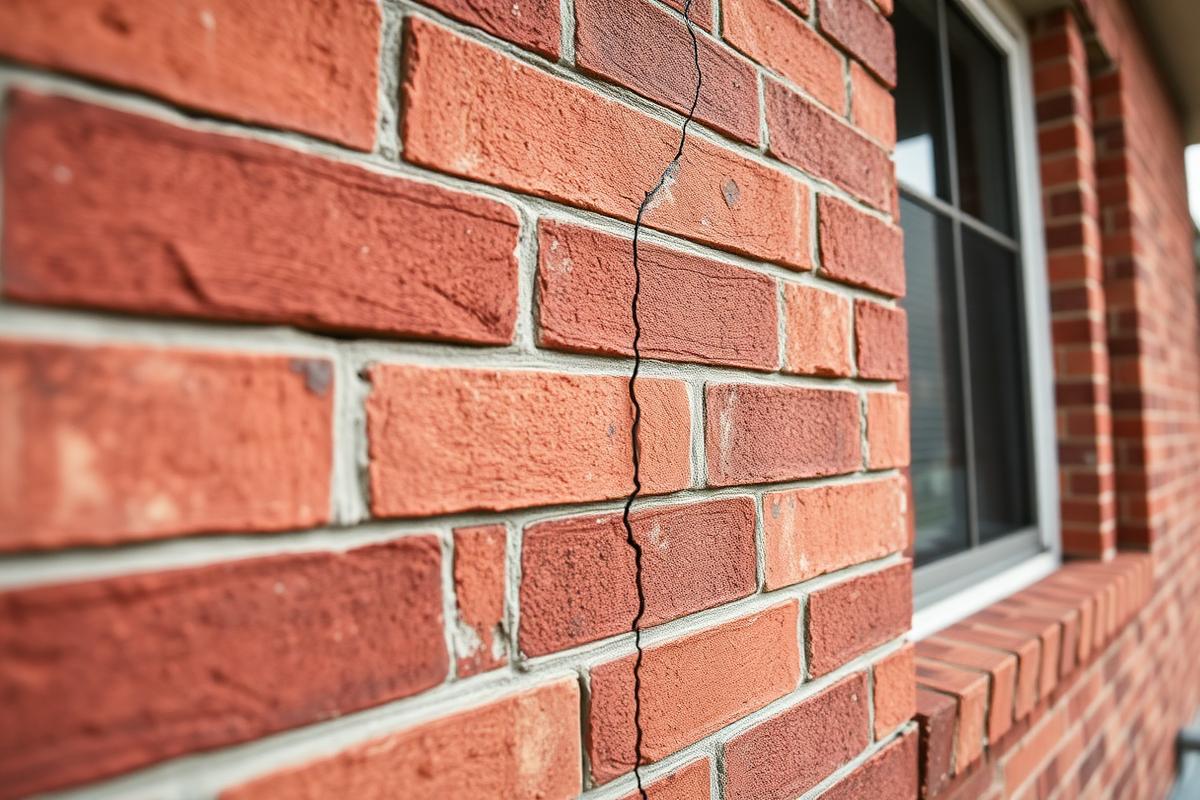
Not every crack means structural failure
Concrete shrinks as it cures, and it keeps responding to temperature and humidity afterward. Drywall joints move with the seasons. Mortar has its own behavior. A large share of the cracks in a Houston-area house have nothing to do with the foundation and never will.
The point of examining a crack is not to decide whether cracks are bad. It is to work out whether this crack is describing movement.
Location, size and pattern
Location. Cracks radiating diagonally from the corners of doors and windows follow the stress concentrations of a wall being pushed out of square. Cracks that continue through a lintel, wrap a corner, or line up inside and outside on the same wall carry more weight than isolated ones.
Direction. Diagonal and stair-step cracks generally indicate differential vertical movement. Straight vertical cracks in drywall seams or along a control joint in concrete are frequently material behavior rather than structural.
Size and offset. Width matters, and so does whether the two sides of the crack are still in the same plane. A crack where one face has shifted relative to the other is describing real displacement.
Change over time. The most useful single piece of information is whether the crack is growing. Mark the ends with a pencil line and a date, photograph it, and check again after a wet season and a dry one.
Cracks caused by settlement
Cracking related to settlement rarely arrives alone. It appears together with floors that slope in the same direction, doors that stopped latching in the same rooms, and gaps at exterior brick on the same elevation. When a cluster of symptoms lines up geographically, it is describing a single movement event.
Slab cracks
In slab-on-grade homes, cracks visible in a garage floor or under flooring are common and often shrinkage-related. They become relevant when they coincide with elevation change across the plan, which is measured rather than observed. More on slab foundation repair.
Why appearance alone is not a diagnosis
No one — homeowner or contractor — can reliably determine structural condition from a photo of a crack. Two identical-looking cracks on two houses can have completely different causes and completely different consequences. The distinction comes from elevation readings, the pattern of damage across the house, and the drainage and construction context.
That is what a free foundation inspection establishes.
Quick reference
Usually cosmetic
Hairline drywall seam cracks, fine surface cracks in a garage slab, minor crazing in concrete.
Worth measuring
Diagonal cracks from door and window corners, stair-step mortar cracking, cracks that keep growing.
Track it
Date and photograph what you see so you can tell whether it is active rather than historic.
Do not seal first
Covering a crack before it is assessed removes the best available indicator of ongoing movement.
Foundation crack questions
Should I fill a crack in my slab?
Sealing a crack keeps moisture and pests out, but it does not address movement and it hides a useful indicator. If there is any question of active movement, have the house measured before covering anything up.
How wide does a crack have to be to matter?
Width is one factor, not the whole picture. A narrow crack that is lengthening, or that appears alongside sloping floors and doors out of square, can be more significant than a wider crack that has not changed in a decade.
Why did cracks appear after a drought?
Extended dry periods shrink clay soils at the perimeter, which removes support from the slab edge. Cracking that shows up at the end of a hot, dry summer in Houston commonly follows that pattern.
Schedule a Free Foundation Inspection
Describe where the cracks are and how long they have been there.
Have a crack you are unsure about?
We will look at it in context — with the floors, the doors and the drainage — and tell you whether it matters.